
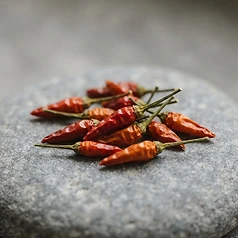
African Bird Pepper (90M HU)
Spice · powder · Mombasa, Kenya
African Bird Pepper (Capsicum frutescens) didn't actually originate in Africa — like all chili peppers, it traces back to the Americas, first growing wild in South America. Portuguese traders introduced it to Mozambique and Angola in the 15th and 16th centuries, where it took to the climate so well that most people today assume it's native.
Known locally as piri piri, peri-peri, or pili-pili — Swahili and Bantu words meaning roughly "pepper-pepper" — it became central to Mozambican, Angolan, and South African cooking. Portuguese settlers later adopted the local marinades built around it, carrying the result back to Portugal and eventually the rest of the world as peri-peri sauce.
Its thin walls make it dry quickly and infuse easily into oils and vinegars, which is why it's most often sold dried, ground, or steeped into sauce rather than eaten fresh.
The "bird pepper" name comes from a trait it shares with many small chilies: birds are unbothered by capsaicin's heat, so they eat the fruit and spread its seeds — a natural partnership that helped the plant establish itself across the continent. Today it's grown throughout Southern and East Africa, and it's best known worldwide as the heat behind peri-peri chicken.