
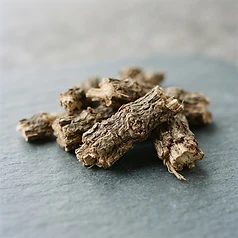
Angelica Root
Herb · c/s · Saxony, Germany
Long before angels entered the story, angelica was already one of the most valued plants of the North. Known to the Vikings as kvann, it grew wild across Scandinavia and Iceland, where its stalks were eaten fresh or cooked and its root used as medicine. Angelica was such a valuable Icelandic export that it was reportedly used as a form of currency in trade up until around 1500. The Sámi people of Lapland used it in salves and tonics, and even believed it could improve milk yield in reindeer.
Its name, though, comes from a much later legend. According to European folklore, during a devastating outbreak of plague, an archangel — most often named as Michael, though some tellings say Raphael or Gabriel — appeared to a monk in a dream and revealed that this root could protect against the disease. The name stuck: Angelica archangelica, "herb of the archangels." People began chewing the root, wearing it around their necks, and burning it indoors to purify the air, especially during a well-documented plague outbreak in Niort, France, in 1602.
Angelica's reputation as a protective, almost sacred herb carried it straight into European monastery life, where Benedictine monks added its root to wines and elixirs, believing it guarded against poison as much as plague. That monastic tradition is exactly why angelica root still appears today in the recipes of classic herbal liqueurs like Chartreuse and Benedictine, prized for the same warm, musky sweetness it's always had — a flavor with a thousand years of legend behind it.
Angelica also holds a distinct place in alchemy. It's one of the classic plants used in spagyrics, the herbal-alchemical tradition Paracelsus founded in the sixteenth century, which separates a plant into its three alchemical principles — sulfur, mercury, and salt — before recombining them into a purified essence. Within that tradition, angelica is associated with the sun and carries symbolic weight as a bridge between the earthly and spiritual realms — a fitting continuation for a plant whose entire origin story is about being revealed to humanity by an archangel.