Artichoke Leaf
Herb · powder · Sicily, Italy
The artichoke carries two completely different origin stories in its name alone. Its scientific name, Cynara, comes from Greek mythology: Zeus fell for a mortal woman named Cynara and made her a goddess, but when she was caught sneaking back to earth to visit her homesick family, an enraged Zeus transformed her into the thorny plant that still bears her name.
The common word "artichoke," though, has nothing to do with Greek myth at all — it traces instead through Arabic. Arab cultivators, credited with refining the wild Mediterranean thistle into something closer to the vegetable we know today as they carried it into Spain during the Middle Ages, called it al-kharshuf, roughly "thorn of the earth." That word became alcachofa in Spanish, articiocco in Italian, and eventually artichoke in English — an entirely separate linguistic lineage running alongside its mythological Latin name.
Artichokes had a genuine reputation to live down once they reached the rest of Europe. When Catherine de' Medici arrived in France in 1533 to marry the future King Henry II, she reportedly ate artichokes with real enthusiasm at court — scandalizing onlookers, since the vegetable carried a widespread reputation as an aphrodisiac considered far too suggestive for a young woman to enjoy so openly.
In more recent history, the artichoke found its own American celebrity moment: in 1948, a young Marilyn Monroe was crowned the first-ever Artichoke Queen at a festival in Castroville, California — a town that still calls itself the Artichoke Capital of the World.
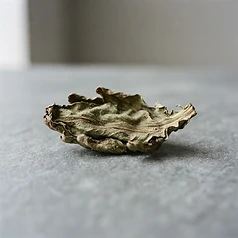
While most of that history centers on the edible heart and bud, the leaves have their own distinct legacy in herbal tradition. Rich in a compound called cynarin, artichoke leaf has long been used separately from the vegetable itself, valued specifically for supporting liver function and digestion — the medicinal half of a plant whose culinary half stole most of the historical spotlight.