
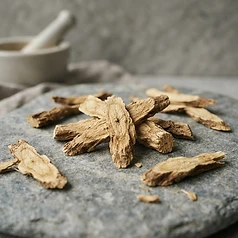
Astragalus Root
Herb · c/s · Gansu, China
In Traditional Chinese Medicine, astragalus root is known as Huang Qi — huang meaning yellow, for the color of the root's interior, and qi here meaning something closer to "elder" or "leader." Together the name translates roughly to "yellow leader," a fitting title for one of the most respected tonic herbs in the entire Chinese pharmacopeia.
Its recorded history stretches back roughly 2,000 years to the Shen Nong Ben Cao Jing, the foundational text of Chinese herbal medicine attributed to the legendary "Divine Farmer" credited with founding Chinese agriculture itself. That text sorted every herb it catalogued into three tiers, and astragalus was placed in the highest: the "superior" class, reserved for herbs considered safe for long-term use in building overall health, rather than treating a single acute ailment.
That classification lines up closely with how astragalus is still used today. In TCM theory, it's considered one of the premier tonics for Qi, the body's vital energy — taken to build resilience and support the body over time rather than address a specific complaint, the same long-view philosophy that earned it a "superior" ranking two millennia ago.
Astragalus grows wild across Inner Mongolia, Shanxi, and other northern Chinese provinces, and wild populations have come under enough harvesting pressure that the plant now holds protected status within China itself — a reminder that even a two-thousand-year-old staple of Chinese medicine isn't immune to modern supply pressures.